


New guide What does 23.4 overs mean?
Scorecard Read O–M–R–W in two minutes
Match maths CRR versus required run rate
Cricket rules LBW from pitching to impact
Live cricket desk
Scores now
Factual match status and scores from the public feed. No modelled probabilities.
Live cards update every 10 seconds while this page is open.
Featured guide / 01
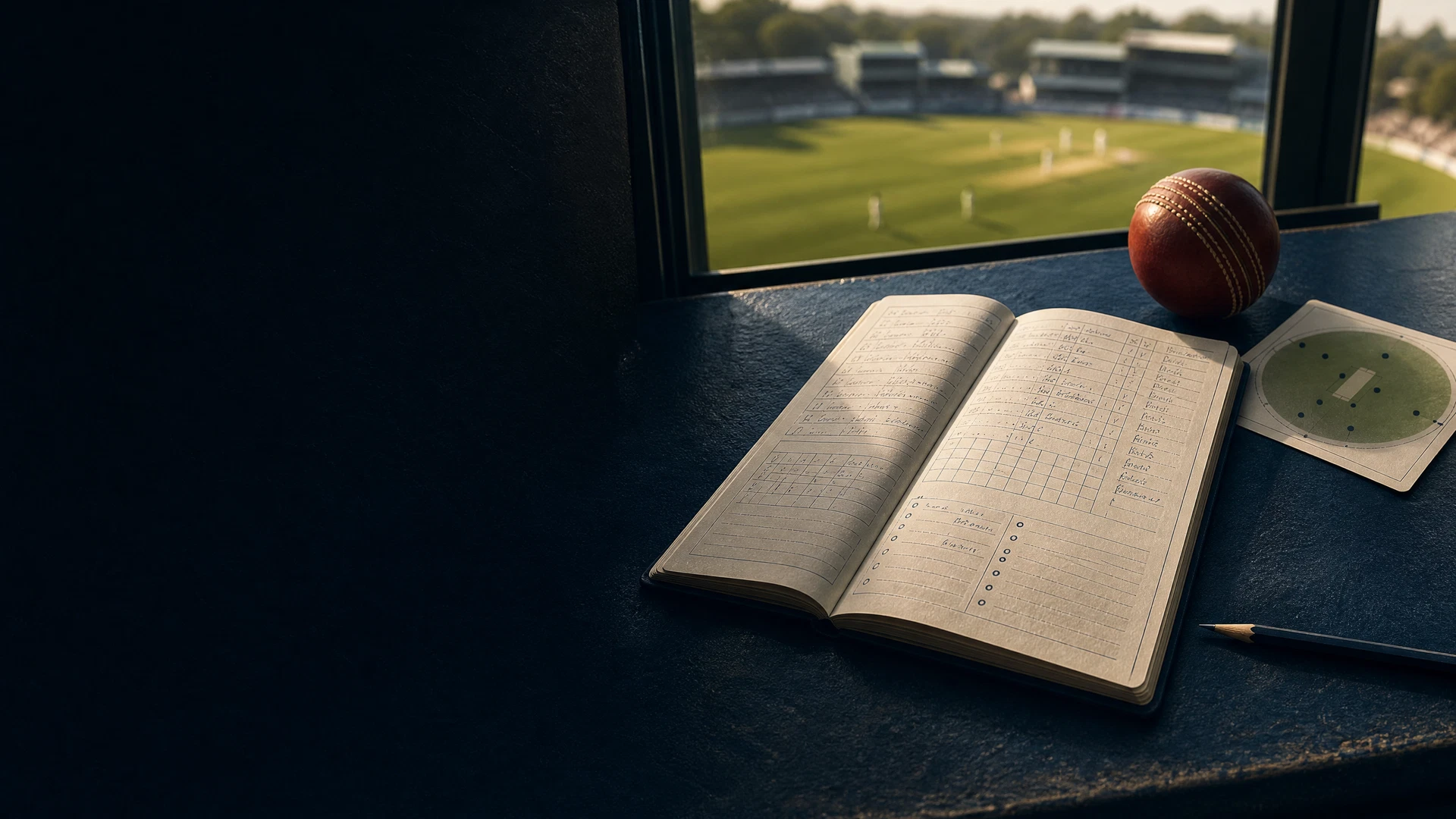
How to read a cricket scorecard
A scorecard is not only a table of numbers. It records who controlled the innings, when pressure changed and how each wicket affected the chase.
Start with the team total, then read wickets, overs, batting rows and bowling figures in sequence. That order turns an unfamiliar scorecard into a compact account of the match.
Read the complete explainerRanked explainers
What does 156/3 mean?
The batting side has scored 156 runs and lost three wickets.
What is 23.4 overs?
It means 23 completed overs plus four legal balls—not a decimal fraction.
How to read O–M–R–W
Overs, maidens, runs conceded and wickets taken in one bowling line.
Data desk
Match maths, with the working shown.
Current run rate
Runs scored ÷ overs completed. This describes the innings pace so far.
Learn CRRRequired run rate
Runs still needed ÷ overs remaining. This is the pace required in a chase.
Net run rate
A tournament comparison using scoring and conceding rates across matches.
Understand NRRIllustrated strip
See the rule before reading it.
LBW
Follow pitching, impact and whether the ball would hit the wicket.
Umpire signals
Connect each visible signal with the decision recorded in the score.
Field positions
Place slips, covers, midwicket and fine leg around a simple field map.
Long-read feature
A scorecard is a match report written in numbers.
The total shows the headline, but the rows explain the story. A rapid opening partnership, a cluster of wickets and an economical spell all appear in the same compact record.
A total such as 156/3 states runs first and wickets second. An over written as 23.4 means 23 complete overs and four legal balls. These two conventions are the quickest way to understand the match position.
Read the numbers in sequence and the shape of the innings becomes visible.
Our full cricket scorecard guide moves from the team total to batting rows, O–M–R–W bowling figures, extras and fall of wickets with one continuous worked example. Related guides then explain current run rate, required run rate, net run rate, umpire signals and format differences.
Continue through the learning library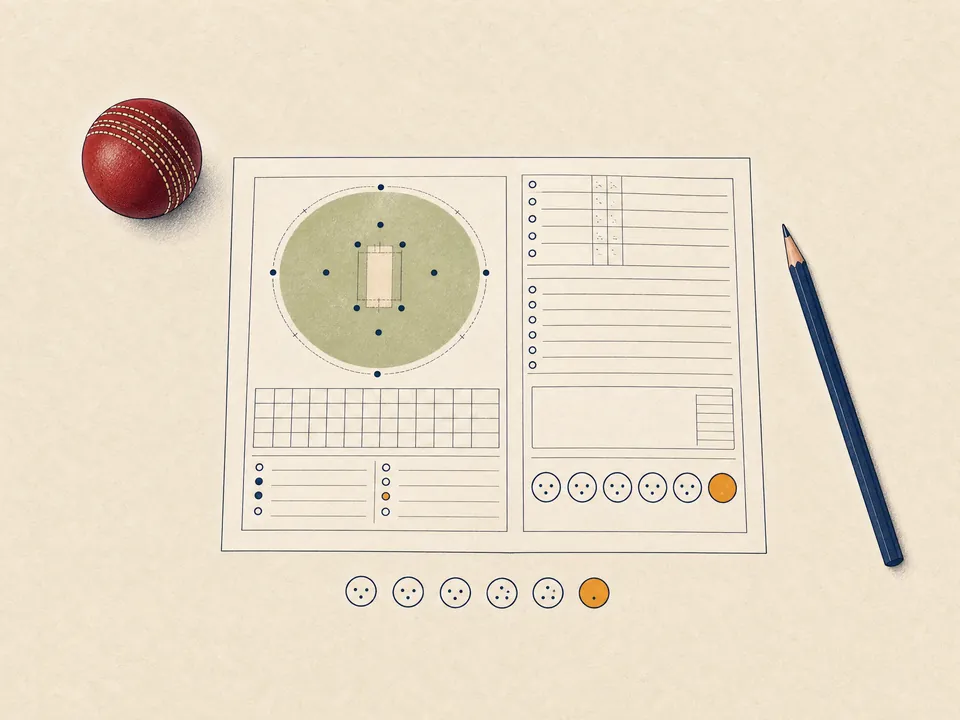
Learning library
Choose the question you need answered.
Source and methodology
Clear enough to follow. Transparent enough to check.
Rules guides begin with current cricket Laws and format-specific playing conditions. Calculators show their inputs and formulas. Live-score cards repeat factual fields supplied by the public feed and do not add predictions.
Reddy Anna Sports Life is organised for readers who want to understand cricket scores before moving to deeper match analysis. Each topic has a distinct purpose: scorecard notation explains what the numbers mean, match maths shows how a result is calculated, and rules guides connect an umpire’s decision with the relevant playing condition.
- 01
- Check the current rule or playing condition.
- 02
- Build an original, plain-language example.
- 03
- Show the working and state the limitation.